
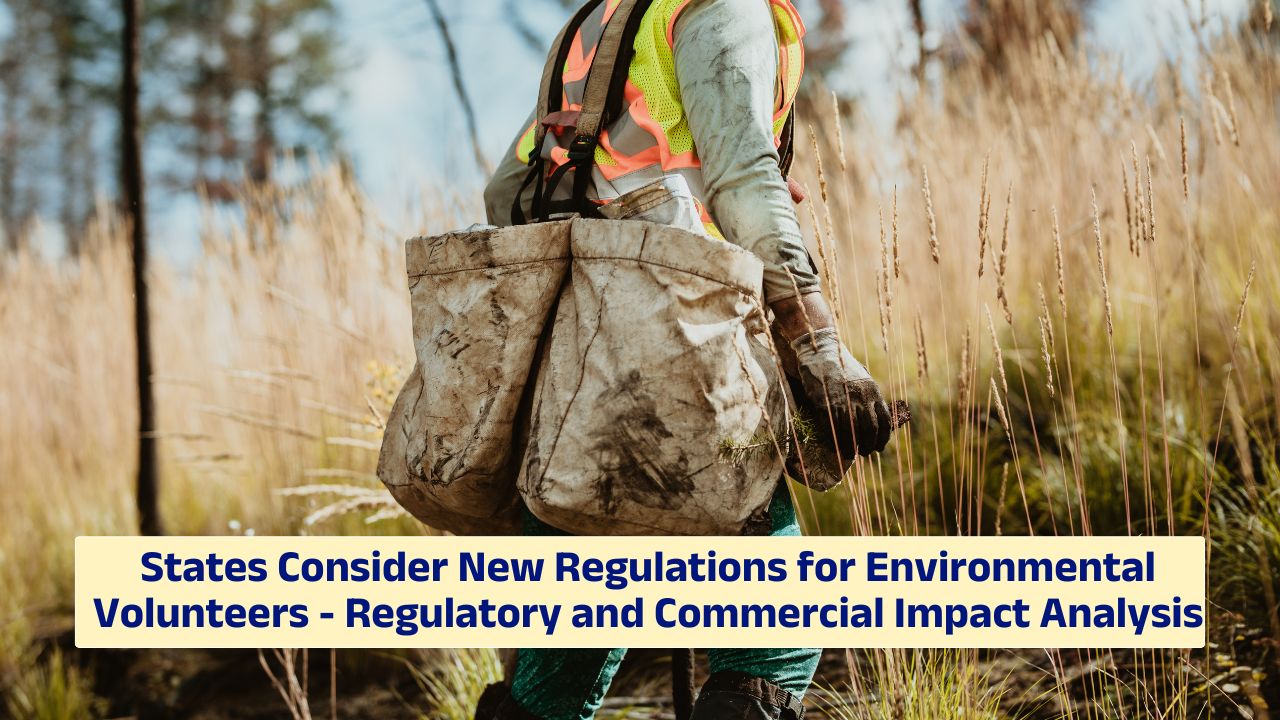
States across the country are reexamining how environmental volunteers operate within conservation programs, disaster response initiatives, and community restoration projects.
What was once an informal civic effort is increasingly viewed through a regulatory lens, particularly as liability exposure, data integrity, and environmental compliance obligations expand.
Lawmakers are now weighing new frameworks that clarify oversight responsibilities while preserving the flexibility that makes volunteer programs effective.
| Key Point | Details |
|---|---|
| Regulatory Focus | Liability, training standards, data reporting, and supervision requirements |
| Primary Drivers | Climate events, citizen science expansion, and environmental litigation risk |
| Affected Sectors | Conservation nonprofits, municipalities, state agencies, and biotech field studies |
| Compliance Implications | Insurance adjustments, background checks, standardized protocols |
| Strategic Outlook | Greater accountability balanced with volunteer accessibility |
Policy Drivers
The push toward regulating environmental volunteers is not occurring in isolation. Severe weather events, wildfire recovery efforts, and water quality monitoring initiatives have expanded dramatically. Volunteers now participate in data collection, habitat restoration, and even post disaster environmental assessments. As their responsibilities grow, so does the need for consistent oversight.
According to the Environmental Protection Agency, citizen science and community monitoring programs play a critical role in environmental protection. However, when volunteer-generated data informs regulatory decisions or grant-funded projects, accuracy and documentation standards become essential.
States are also responding to rising litigation risks. Environmental disputes increasingly involve documentation of site conditions, contamination records, or species counts. If volunteer-collected information becomes evidence in administrative or judicial proceedings, questions of training, supervision, and procedural integrity quickly surface.
Liability
One of the most significant regulatory considerations involves liability. Environmental volunteers frequently work in potentially hazardous settings such as wetlands, wildfire zones, and contaminated sites. Without clearly defined statutory protections, both sponsoring organizations and state agencies may face exposure if injuries occur.
New legislative proposals often focus on clarifying who bears responsibility for safety training, equipment standards, and insurance coverage. Some states are considering mandatory risk disclosures or minimum supervision ratios for higher-risk projects.
Others are investigating uniform volunteer protection statutes that align environmental programs with broader nonprofit liability frameworks.
Policymakers are also evaluating how volunteer protections intersect with workers’ compensation laws. The classification of volunteers versus temporary workers can significantly alter legal obligations for municipalities and conservation groups.
Standardization
Beyond liability, standardization is emerging as a central theme. Environmental programs increasingly rely on volunteers for biodiversity monitoring, invasive species tracking, and water sampling. Inconsistent methodologies can undermine long-term datasets and weaken policy decisions.
State regulators are considering structured training requirements, certification pathways, and standardized reporting templates. These measures aim to improve data reliability without imposing excessive administrative burdens.
In some cases, agencies are looking to models outlined by the National Conference of State Legislatures to harmonize state-level approaches.
For biotech companies collaborating on ecological field studies or pilot remediation projects, standardized volunteer frameworks could enhance credibility and regulatory acceptance of community-sourced data.
Community Impact
Environmental volunteerism has historically thrived because of its accessibility. Community members can engage in tree planting, shoreline cleanups, and wildlife surveys with minimal barriers. Overregulation could unintentionally discourage participation, particularly in underserved areas where volunteer-driven initiatives fill resource gaps.
State lawmakers must therefore strike a balance. Clear guidelines can protect volunteers and ensure scientific integrity. Excessive administrative requirements, however, risk slowing emergency response efforts or reducing grassroots engagement.
Public comment periods reveal that many stakeholders support reasonable training standards but caution against complex licensing schemes. Environmental nonprofits, in particular, emphasize that volunteer retention depends on simplicity and transparency.
Commercial Implications
For environmental consulting firms, biotech startups, and sustainability-focused corporations, evolving volunteer regulations carry operational implications. Partnerships with community groups may require updated compliance reviews, revised memoranda of knowing, and enhanced documentation protocols.
Insurance carriers are also closely monitoring these legislative developments. Premium adjustments may follow if statutory protections expand or contract. Organizations that rely heavily on volunteer labor should proactively assess risk management frameworks before new rules take effect.
In the longer term, clearer regulatory structures could improve funding opportunities. Grant-making institutions often prioritize accountability and measurable outcomes. A standardized volunteer governance model may strengthen proposals by demonstrating procedural rigor.
As states continue deliberations, the most effective regulatory approach will likely emphasize clarity rather than restriction.
Environmental volunteers remain indispensable to conservation efforts, disaster resilience, and public engagement. Thoughtful policy design can reinforce their contributions while safeguarding legal and scientific standards.
FAQs
Why regulate environmental volunteers?
To manage liability and data integrity risks.
Will new rules limit participation?
They may if requirements become excessive.
Do volunteers face legal exposure?
Yes, depending on state liability laws.
Are training standards increasing?
Many states are considering them.
How should organizations prepare?
Review insurance and compliance policies.