
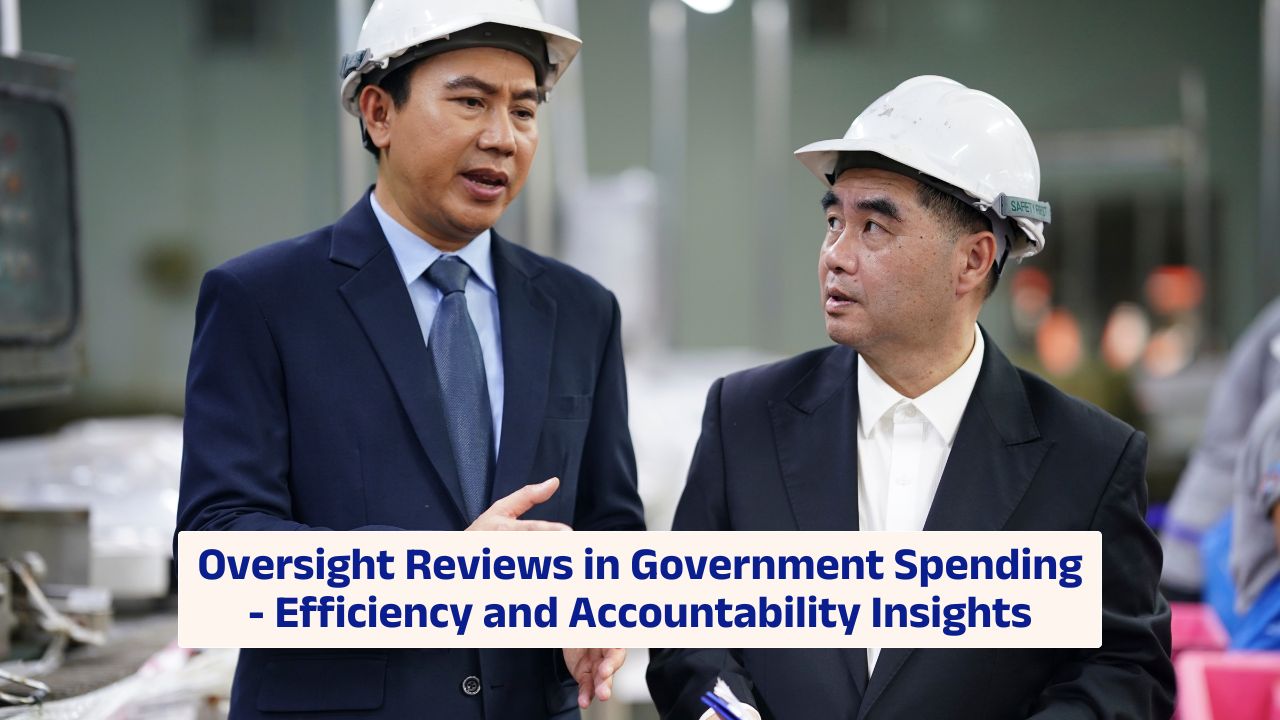
Government budgets face constant pressure to deliver results while maintaining fiscal discipline. In response, oversight reviews have become an increasingly important mechanism for evaluating how public funds are allocated and whether spending programs deliver measurable value.
Across many economies, these reviews are now used to identify inefficiencies, eliminate duplication, and redirect resources toward higher-impact priorities.
Rather than simply cutting budgets, modern oversight reviews focus on evidence-based performance analysis. Policymakers examine outcomes, administrative processes, and long-term fiscal sustainability.
This shift reflects a broader effort to ensure that taxpayer resources are used effectively while preserving essential public services.
| Key Point | Details |
|---|---|
| Purpose | Evaluate efficiency and effectiveness of government spending programs |
| Methods | Data analysis, performance metrics, and program evaluation |
| Policy Impact | Helps reallocate resources toward higher value initiatives |
| Fiscal Outcomes | Supports deficit control and sustainable budgeting |
| Governance Benefit | Strengthens transparency and accountability in public finance |
Purpose
The primary goal of oversight reviews is to strengthen fiscal responsibility without undermining public services. Governments manage complex portfolios of programs that span healthcare, infrastructure, education, defense, and social services. Over time, programs may expand, overlap, or become outdated.
Oversight reviews provide a structured process to assess whether these initiatives still meet policy objectives. By examining performance outcomes and operational costs, policymakers can determine whether programs should be expanded, redesigned, or discontinued.
International institutions have long emphasized the importance of this approach. Research published by the OECD guidance on spending reviews highlights how systematic evaluations help governments prioritize spending and improve budget transparency.
Process
A typical oversight review begins with the identification of priority spending areas. These may include large budget categories or sectors where efficiency concerns have emerged. Analysts then collect financial data, operational reports, and outcome indicators related to those programs.
The review process often combines quantitative analysis with policy evaluation. Analysts assess administrative costs, duplication across agencies, and the alignment between spending and measurable outcomes. Independent audit institutions may also participate to strengthen credibility and transparency.
Many governments also consult external experts, economists, and academic researchers. This broader perspective helps ensure that recommendations are grounded in evidence rather than political preference.
Efficiency
Efficiency improvements are one of the most immediate benefits of oversight reviews. When agencies are required to justify spending against performance indicators, inefficient practices become easier to identify.
Administrative redundancies, outdated processes, and overlapping programs can be streamlined or consolidated.
For example, digital modernization initiatives often emerge from spending reviews. Governments may identify opportunities to automate administrative tasks or centralize procurement systems. These changes can reduce operational costs while improving service delivery.
Efficiency gains also support long-term fiscal sustainability. When resources are allocated more strategically, governments can maintain critical programs even during periods of economic pressure.
Accountability
Another key benefit of oversight reviews is improved accountability. Public sector spending involves large amounts of taxpayer money, and transparency is essential for maintaining public trust. Oversight reviews create a documented process that explains how funding decisions are made.
Independent evaluation and public reporting help ensure that policy decisions are based on objective analysis. Legislatures, oversight committees, and audit agencies often review findings and recommendations before major budget adjustments are implemented.
Global financial institutions have repeatedly highlighted the importance of such governance practices.
The World Bank’s overview of public financial management emphasizes that transparent spending oversight strengthens institutional credibility and improves long-term economic outcomes.
Challenges
Despite their benefits, oversight reviews are not always easy to implement. Public sector programs often involve complex objectives that cannot be measured through simple financial indicators.
Social outcomes such as public health improvements or education quality require long-term evaluation.
Political considerations can also influence spending decisions. Some programs have strong public support even if their efficiency is debated. As a result, policymakers must balance fiscal discipline with social priorities.
Successful oversight systems, therefore, depend on strong institutional frameworks, reliable data, and clear performance metrics. Without these elements, reviews risk becoming procedural exercises rather than meaningful policy tools.
As governments confront rising fiscal demands and evolving policy priorities, oversight reviews will continue to play a central role in public financial management.
By focusing on efficiency, accountability, and evidence-based decision-making, these evaluations help ensure that public spending delivers maximum value while maintaining the trust of citizens and stakeholders.
FAQs
What is an oversight review in government?
It evaluates how effectively public funds are spent.
Why are spending reviews important?
They improve efficiency and strengthen fiscal accountability.
Who conducts oversight reviews?
Government analysts, auditors, and independent experts.
Do spending reviews reduce budgets?
They focus on efficiency, not automatic budget cuts.
What sectors are commonly reviewed?
Healthcare, infrastructure, education, and defense.