
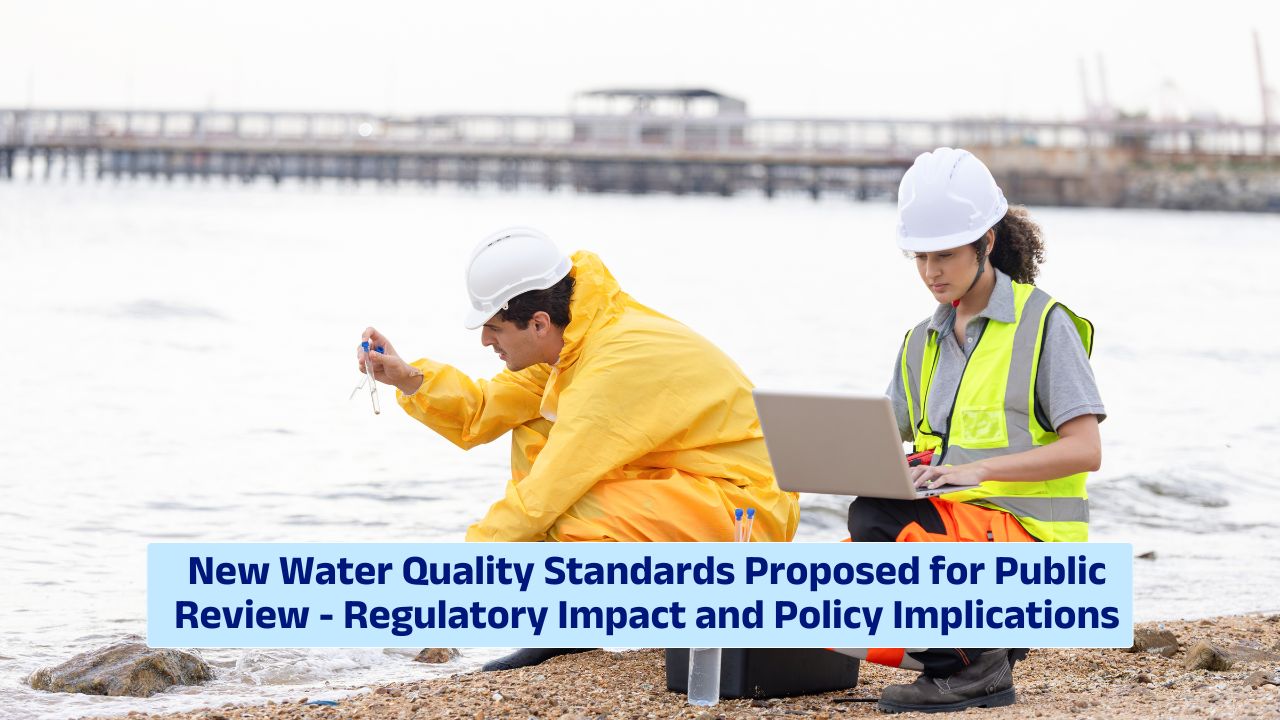
Governments and environmental regulators periodically revise water quality standards to reflect new scientific evidence, emerging contaminants, and evolving public health priorities.
A newly proposed set of water quality standards has now been released for public review, marking an important step in the regulatory process that governs how drinking water, rivers, lakes, and groundwater are monitored and protected.
These proposals aim to strengthen safeguards for ecosystems while ensuring that public drinking water systems meet higher safety benchmarks.
The public consultation phase allows researchers, industry stakeholders, environmental organizations, and community members to evaluate the proposed rules before they are finalized.
This process is essential because water quality regulations influence municipal infrastructure investments, industrial discharge limits, agricultural practices, and long-term environmental health outcomes.
| Key Point | Details |
|---|---|
| Regulatory Update | New standards aim to strengthen protection for drinking water and ecosystems |
| Public Consultation | Stakeholders can submit comments during the official review period |
| Emerging Contaminants | Updated limits may address chemicals such as PFAS and nutrient pollution |
| Compliance Impact | Utilities and industries may need new treatment technologies |
| Environmental Protection | Stronger benchmarks support aquatic biodiversity and watershed health |
Purpose
The primary objective of revising water quality standards is to ensure that regulatory frameworks keep pace with scientific knowledge. Over time, research reveals new contaminants and health risks that earlier regulations may not have addressed.
Updating standards allows regulators to refine acceptable contaminant levels, monitoring methods, and enforcement mechanisms.
Many proposals focus on substances that have gained global attention in recent years. Persistent chemicals such as per- and polyfluoroalkyl substances, commonly called PFAS, have been detected in drinking water sources worldwide.
Health agencies and environmental scientists have emphasized the need for stricter limits because these compounds can accumulate in the human body and environment.
Regulatory frameworks also consider biological indicators such as bacteria levels, nutrient concentrations, and dissolved oxygen. These indicators determine whether water bodies can safely support aquatic life and recreational activities.
Changes
The proposed standards introduce several technical changes designed to improve water monitoring and compliance. In many cases, regulators are proposing lower allowable concentrations for certain contaminants based on updated toxicological data and risk assessments.
Another major component involves enhanced monitoring requirements. Water utilities and industrial facilities may be required to conduct more frequent testing or use more sensitive analytical techniques. These updates help regulators identify contamination events earlier and respond more effectively.
Some proposals also revise how water bodies are classified. Lakes, rivers, and coastal waters may receive updated designations based on ecological importance or drinking water usage. This classification determines which pollutant thresholds apply and how regulators evaluate environmental impacts.
Global regulatory bodies have increasingly emphasized the importance of evidence-based standards. Guidance published by the World Health Organization on drinking water guidelines provides a scientific foundation that many national regulators use when updating their policies.
Implications
Stricter water quality standards often lead to improvements in environmental protection and public health, but they also introduce operational and financial considerations for water utilities and regulated industries.
Municipal water providers may need to upgrade treatment plants or invest in advanced filtration technologies to meet new limits.
Industries that discharge wastewater into rivers or lakes may also face revised permit requirements. Compliance could involve process changes, additional treatment systems, or continuous monitoring technologies to ensure that effluent meets regulatory thresholds.
Environmental groups generally view stronger water standards as a critical step toward restoring ecosystems affected by pollution. Health experts similarly support stricter limits because contaminated water supplies can contribute to chronic diseases and long-term ecological damage.
Regulators often rely on frameworks similar to those used by the US Environmental Protection Agency’s water quality standards handbook, which outlines how scientific evidence is translated into enforceable water safety limits.
Participation
The public review stage represents one of the most important phases of the regulatory process. Draft standards are released so that scientists, local governments, environmental organizations, and industry groups can evaluate potential impacts and provide feedback.
Comments submitted during this period can influence how final standards are written. Regulators often adjust pollutant limits, monitoring procedures, or compliance timelines based on credible technical input.
Public engagement ensures that regulatory decisions balance environmental protection with practical implementation.
Transparent consultation also strengthens public trust in environmental governance. When communities understand how standards are developed and have an opportunity to contribute, policies tend to gain broader acceptance and stronger compliance.
As water scarcity and pollution pressures continue to grow globally, updated water quality standards will play an increasingly important role in protecting both ecosystems and drinking water systems.
The current public review period, therefore, represents a crucial opportunity for stakeholders to shape regulations that will guide water management for years to come.
FAQs
What are water quality standards?
They define safe pollutant limits for water bodies.
Why are standards updated?
New science and contaminants require updated limits.
Who reviews proposed standards?
Scientists, industries, agencies, and the public.
Do stricter standards affect utilities?
Yes, utilities may upgrade treatment systems.
How can the public participate?
Submit comments during the official review period.