
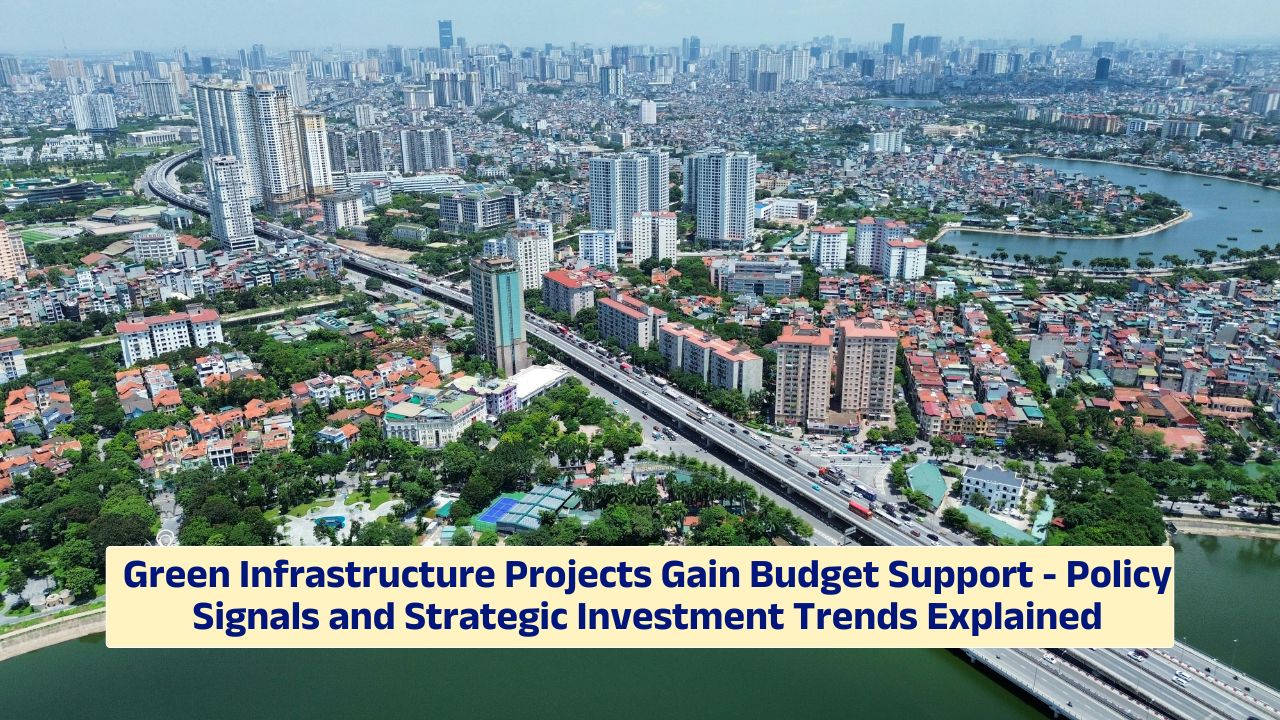
Green infrastructure projects are receiving expanded budget support in 2026 as governments increasingly prioritize sustainable development and climate resilience. Public investment strategies are shifting toward infrastructure systems that reduce environmental impact while improving long-term economic stability.
From urban stormwater systems to renewable energy corridors and climate-resilient transport networks, green infrastructure is now a central component of national and state-level capital planning.
Unlike traditional infrastructure that often focuses solely on physical expansion, green infrastructure integrates environmental sustainability directly into project design.
Policymakers are recognizing that ecological systems such as wetlands, urban forests, and green drainage networks can function as infrastructure assets.
These solutions reduce flood risks, improve air quality, and enhance urban livability while lowering long term maintenance costs.
| Governments are allocating larger infrastructure budgets to climate-friendly projects. | Details |
|---|---|
| Budget Expansion | Governments are allocating larger infrastructure budgets to climate friendly projects. |
| Urban Resilience | Cities are investing in green drainage, parks, and flood protection systems. |
| Renewable Integration | Infrastructure planning increasingly supports renewable energy networks. |
| Economic Benefits | Green projects create jobs while reducing long term environmental costs. |
| Policy Alignment | Infrastructure spending is aligned with climate and sustainability goals. |
Momentum
Government budgets in 2026 show a clear shift toward climate-aligned infrastructure. Investment plans increasingly prioritize projects that deliver environmental, economic, and social benefits simultaneously.
Policymakers are responding to rising climate risks such as flooding, urban heat, and water scarcity by funding infrastructure systems that strengthen long term resilience.
International institutions have also encouraged this transition. According to the World Bank green infrastructure program, sustainable infrastructure investments can help countries achieve economic growth while reducing environmental pressures. This approach is influencing how governments structure infrastructure financing and project approval frameworks.
Projects
Green infrastructure projects vary widely depending on regional priorities. Urban areas are focusing on green stormwater systems that capture rainfall through permeable surfaces, rain gardens, and restored wetlands. These systems reduce pressure on conventional drainage networks while lowering flood risks.
Energy infrastructure is also undergoing transformation. Governments are funding renewable transmission corridors, battery storage facilities, and grid modernization initiatives that enable large-scale integration of solar and wind power. These projects are essential for achieving long-term energy transition goals.
Transport systems are another area of innovation. Many states are investing in low-emission public transit networks, electric vehicle charging infrastructure, and sustainable urban mobility corridors. These investments aim to reduce carbon emissions while improving connectivity and accessibility.
Finance
Financing green infrastructure requires coordinated public and private investment. Governments are increasingly using blended financing models that combine public budgets, development bank funding, and private capital.
Green bonds and sustainability-linked financing mechanisms are also playing a growing role in infrastructure funding.
Guidelines from the OECD Sustainable Infrastructure Initiative emphasize the importance of transparent governance, clear regulatory frameworks, and strong project evaluation standards. These measures help ensure that green infrastructure investments deliver measurable environmental and economic outcomes.
Impact
The expansion of green infrastructure budgets has significant economic implications. Infrastructure construction generates employment across engineering, construction, environmental science, and technology sectors.
At the same time, environmentally sustainable systems reduce long-term costs associated with disaster recovery, pollution control, and energy inefficiency.
Urban planning strategies are increasingly integrating green infrastructure as a core design principle rather than an optional environmental feature. Cities that successfully implement these systems often experience improved public health outcomes, stronger climate resilience, and a higher quality of life.
As climate pressures intensify and sustainability goals become more central to economic planning, green infrastructure projects are expected to remain a key focus of government budgets.
Strategic investment in these systems offers a pathway to build resilient economies while protecting environmental resources for future generations.
FAQs
What is green infrastructure?
Infrastructure designed to support environmental sustainability.
Why are governments funding green infrastructure?
To improve climate resilience and reduce environmental impact.
What projects qualify as green infrastructure?
Renewable energy grids, wetlands, green drainage systems.
How is green infrastructure financed?
Through public budgets, green bonds, and private investment.
Does green infrastructure create jobs?
Yes, the construction and clean energy sectors benefit.