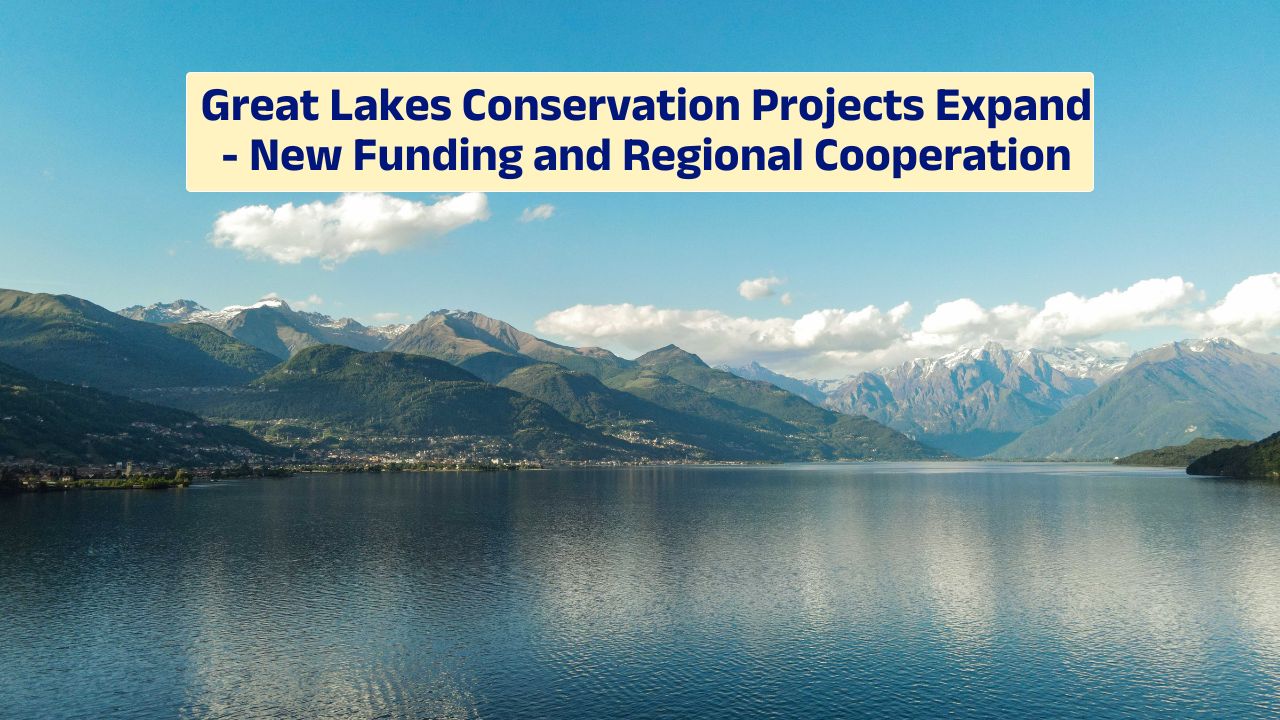
Great Lakes conservation projects are expanding at a measurable pace this year, backed by stronger funding commitments, policy coordination, and science driven restoration planning.
Public agencies and regional partners are accelerating work on habitat recovery, pollution control, and shoreline stabilization to safeguard one of the largest freshwater systems in the world.
| Key Point | Details |
|---|---|
| Expanded Funding | Higher federal and state allocations for restoration and cleanup |
| Habitat Recovery | Wetland rebuilding, fish habitat enhancement, shoreline repair |
| Pollution Mitigation | Sediment remediation, runoff reduction, industrial site treatment |
| Binational Alignment | Joint US and Canada monitoring and regulatory coordination |
| Local Impact | Economic revitalization, recreation growth, job creation |
Momentum
The Great Lakes basin supports drinking water for millions of residents, along with commercial shipping, fisheries, and tourism. As environmental pressures evolve, conservation efforts must scale accordingly. This year’s project expansion reflects both ecological urgency and long term strategic planning.
A major driver behind the growth is increased federal investment through programs such as the Great Lakes Restoration Initiative. The initiative channels resources into high priority areas identified through scientific assessment and regional consultation.
State governments are aligning their environmental budgets with these federal commitments, creating a layered funding structure that accelerates implementation. By coordinating financial support across agencies, projects move more efficiently from assessment to active restoration.
Habitats
Habitat restoration remains central to Great Lakes conservation projects. Coastal wetlands are being reconstructed to restore their natural filtration function and to strengthen resilience against storm surges.
Wetlands reduce nutrient loading, absorb excess runoff, and provide breeding grounds for fish and migratory birds. According to the International Union for Conservation of Nature, wetlands play a critical role in biodiversity and water regulation. Their rehabilitation directly supports long term water quality protection.
Beyond wetlands, projects are enhancing fish spawning habitats through reef construction and barrier removal. Shoreline stabilization efforts are also underway to counter erosion caused by fluctuating water levels and intensified weather patterns.
Each intervention is guided by ecological data, ensuring that restoration investments produce measurable outcomes rather than isolated improvements.
Pollution
Legacy pollution continues to challenge certain harbor zones and tributaries. Expanded sediment remediation projects are targeting contaminated lakebeds that contain industrial residues from previous decades.
These cleanups require detailed site assessments and careful dredging to prevent secondary contamination. Modern remediation techniques emphasize containment and safe disposal while minimizing disruption to aquatic ecosystems.
Agricultural runoff is another focus area. Excess nutrients entering the lakes can trigger harmful algal blooms that affect drinking water supplies and recreational access. Watershed management programs are encouraging soil conservation, precision fertilizer application, and buffer zone development along waterways.
The integration of pollution mitigation with habitat recovery ensures that restored ecosystems are not undermined by ongoing contamination.
Cooperation
The Great Lakes are shared by the United States and Canada, making binational governance essential. Conservation progress depends on aligned water quality standards, coordinated monitoring, and shared research.
Agencies are strengthening data exchange systems and harmonizing reporting protocols. This alignment reduces regulatory gaps and supports consistent enforcement across borders.
Joint scientific initiatives are also expanding, allowing researchers to track invasive species trends, climate impacts, and nutrient flows at a basin wide scale. Cross border collaboration enhances accountability and ensures that conservation gains in one jurisdiction are not offset by inaction in another.
Communities
Local communities are experiencing tangible benefits from the expansion of Great Lakes conservation projects. Environmental restoration often serves as a catalyst for waterfront redevelopment and tourism growth.
Improved water clarity and restored shorelines increase property values and attract recreational activity. Fishing, boating, and outdoor events contribute to regional economic stability.
At the same time, restoration initiatives create employment opportunities in environmental engineering, construction, monitoring, and ecological consulting. Workforce development programs are integrating conservation skills training to support long term project continuity.
Community engagement remains a priority. Public education campaigns promote responsible water use, volunteer shoreline cleanups, and citizen science initiatives that strengthen local stewardship.
The expanded scope of Great Lakes conservation this year demonstrates that sustained investment, scientific planning, and cross border cooperation can produce meaningful environmental progress.
By integrating habitat recovery, pollution control, and economic revitalization, the region is building a more resilient freshwater future grounded in practical action and accountable governance.
FAQs
What funds these projects?
Federal and state restoration programs.
Why focus on wetlands?
They improve water quality and habitats.
How is pollution reduced?
Through dredging and runoff controls.
Is Canada involved?
Yes, through joint governance efforts.
Do projects help local economies?
Yes, via jobs and recreation growth.