
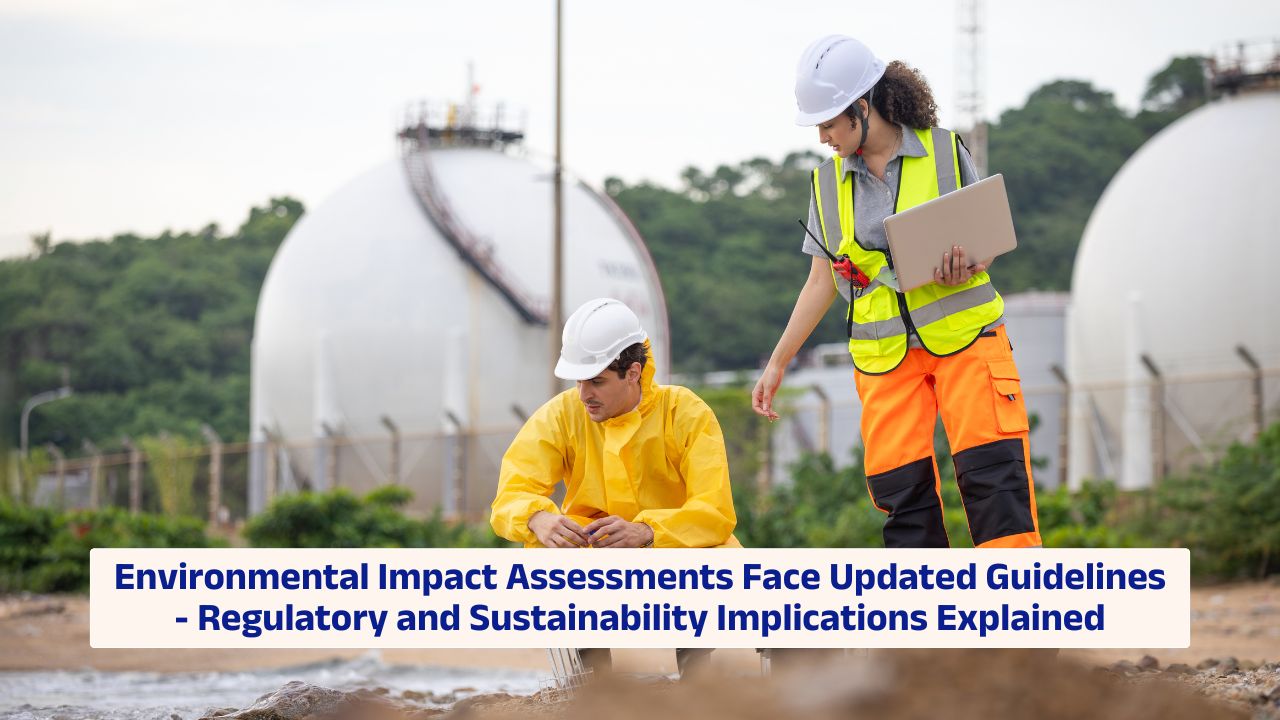
Environmental Impact Assessments are undergoing significant procedural updates as regulators modernize evaluation standards to address climate risks, biodiversity protection, and infrastructure expansion.
Governments and environmental authorities are refining assessment guidelines to ensure development projects are reviewed with stronger scientific evidence, improved transparency, and clearer mitigation requirements.
Environmental Impact Assessments have long served as a critical regulatory tool that evaluates how proposed projects may affect ecosystems, water resources, air quality, and surrounding communities.
However, evolving environmental risks and large-scale infrastructure investments have prompted policymakers to update assessment frameworks to better align with modern sustainability goals and international environmental governance practices.
| Assessments now evaluate climate resilience and long-term emissions impact. | Details |
|---|---|
| Guideline Updates | Regulators are introducing revised environmental assessment procedures. |
| Climate Risk Integration | Assessments now evaluate climate resilience and long term emissions impact. |
| Biodiversity Protection | New frameworks require deeper ecosystem and habitat analysis. |
| Public Participation | Communities are gaining expanded opportunities to review project plans. |
| Digital Reporting | Environmental data and monitoring tools are becoming more standardized. |
Reforms
Updated Environmental Impact Assessment guidelines are designed to strengthen regulatory oversight while ensuring development projects address environmental risks before construction begins.
These reforms aim to improve the quality of environmental data, require stronger mitigation planning, and ensure that decision makers receive comprehensive information when evaluating major projects.
Modern Environmental Impact Assessments increasingly rely on interdisciplinary analysis. Environmental scientists, policy experts, and engineers collaborate to examine project impacts across multiple domains, including water systems, soil health, wildlife habitats, and air emissions.
Guidance from organizations such as the United Nations Environment Programme emphasizes that robust assessment frameworks are essential for balancing economic development with ecological protection.
Regulators are also standardizing reporting formats so that environmental findings can be reviewed more efficiently. Consistent documentation helps authorities compare projects and identify potential cumulative impacts across regions.
Climate
One of the most notable changes in the updated Environmental Impact Assessment guidelines is the integration of climate-related risks. Projects must now consider how climate change could affect infrastructure durability, water availability, and long-term environmental stability.
Climate assessments often evaluate greenhouse gas emissions associated with construction and operations. Developers may also be required to demonstrate how projects can reduce emissions through energy efficiency measures, renewable energy integration, or sustainable construction practices.
According to policy frameworks highlighted by the World Bank environmental assessment program, incorporating climate risk analysis improves infrastructure resilience while supporting national sustainability strategies.
Biodiversity
Biodiversity protection is another area receiving stronger attention under updated Environmental Impact Assessment guidelines. Development activities such as mining, transportation infrastructure, and urban expansion can significantly disrupt ecosystems if environmental risks are not carefully evaluated.
Revised guidelines require more detailed ecological studies that examine species diversity, habitat connectivity, and ecosystem services. Environmental consultants may conduct field surveys, wildlife monitoring, and habitat mapping to determine how proposed projects might affect local biodiversity.
If risks are identified, developers must propose mitigation strategies such as habitat restoration, conservation offsets, or project design modifications that reduce ecological disruption.
Transparency
Transparency and public participation are becoming central elements of updated Environmental Impact Assessment processes.
Communities located near proposed development projects often experience direct environmental and social impacts, making public engagement an important part of regulatory review.
Updated guidelines frequently require developers to publish environmental reports, organize consultation meetings, and respond to community feedback before approvals are granted. These practices improve accountability and allow stakeholders to raise concerns regarding environmental risks.
Digital reporting platforms are also transforming how Environmental Impact Assessments are managed. Online databases allow regulators, researchers, and citizens to access environmental documentation and monitor project compliance more effectively.
As environmental regulations evolve, updated Environmental Impact Assessment guidelines are expected to play a crucial role in shaping sustainable development policies.
By strengthening scientific analysis, climate considerations, and public engagement, regulators aim to ensure that future infrastructure and industrial projects align with long-term environmental protection goals.
FAQs
What is an Environmental Impact Assessment?
A study evaluating the environmental risks of proposed projects.
Why are EIA guidelines being updated?
To address climate risks and improve environmental oversight.
Who conducts Environmental Impact Assessments?
Environmental experts, consultants, and regulatory agencies.
What projects require an EIA?
Large infrastructure, industrial, or land development projects.
How do EIAs protect ecosystems?
They identify risks and require mitigation measures.