
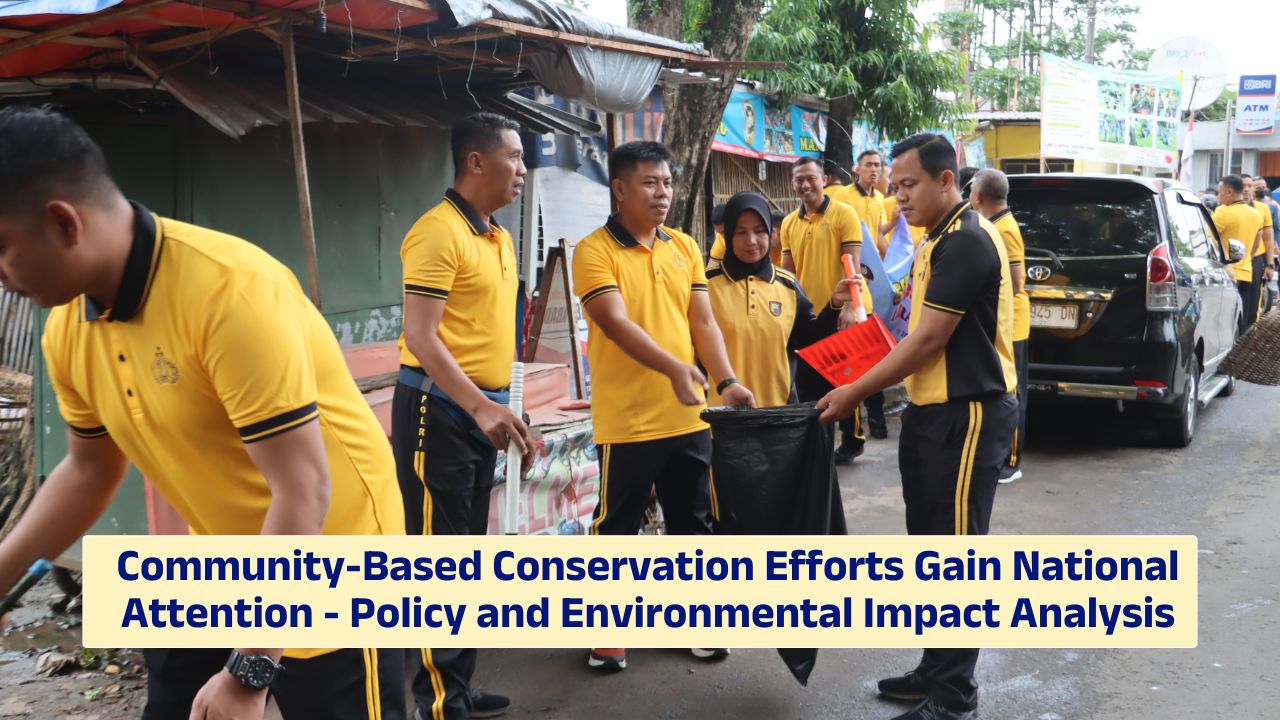
Grassroots environmental stewardship is moving from the margins to the mainstream as community-based conservation efforts gain national attention.
Across forests, coastal zones, wetlands, and urban ecosystems, locally led conservation models are demonstrating measurable ecological recovery while strengthening social cohesion and economic resilience.
Policymakers, conservation investors, and environmental regulators are increasingly recognizing that sustainable outcomes often begin at the community level.
| Key Point | Details |
|---|---|
| Local Governance | Communities participate directly in resource management decisions |
| Biodiversity Protection | Restoration of habitats through indigenous and local knowledge |
| Economic Incentives | Sustainable livelihoods linked to conservation outcomes |
| Policy Integration | Alignment with national environmental and climate frameworks |
| Monitoring Systems | Data collection partnerships with academic and public agencies |
Momentum
Community-based conservation has evolved beyond isolated pilot programs. It now forms part of broader national biodiversity strategies and climate resilience plans. Governments are incorporating local stewardship frameworks into protected area expansion, watershed management, and coastal restoration initiatives.
Recognition from institutions such as the World Bank environmental programs underscores the growing policy relevance of participatory conservation. Funding mechanisms increasingly prioritize locally driven proposals that demonstrate long-term governance structures rather than short-term ecological interventions.
National attention often follows demonstrable impact. In regions where deforestation rates have declined due to community forestry agreements, governments are studying these models as scalable solutions.
Governance
At the core of community-based conservation efforts is shared governance. Unlike centralized environmental management systems, these initiatives distribute decision-making authority to local stakeholders. Indigenous groups, smallholder farmers, fisher cooperatives, and municipal leaders collaborate on resource allocation and protection strategies.
This governance model reduces enforcement gaps. When communities perceive ownership of conservation outcomes, compliance increases naturally. Monitoring becomes embedded within social networks rather than reliant solely on external policing.
Legal recognition remains critical. National legislation that formalizes community land rights and co-management agreements enhances program durability. Without regulatory backing, grassroots conservation efforts can struggle against competing commercial pressures.
Biodiversity
Ecological recovery is a central indicator of success. Community-led reforestation, wetland restoration, and wildlife corridor development have demonstrated measurable biodiversity gains. Local ecological knowledge often accelerates habitat recovery by tailoring restoration techniques to microclimates and species dynamics.
The IUCN guidance on nature-based solutions highlights how integrating traditional practices with scientific monitoring enhances ecosystem resilience. Community rangers and citizen scientists contribute real-time field observations that complement satellite-based environmental assessments.
Importantly, conservation outcomes are not limited to rural landscapes. Urban neighborhoods are restoring green spaces, reducing heat islands, and improving water management through participatory planning frameworks.
Economics
Economic sustainability is often the determining factor in whether conservation programs endure. Community-based models frequently align environmental goals with livelihood opportunities.
Ecotourism, sustainable fisheries, agroforestry, and payment for ecosystem services programs provide diversified income streams tied directly to conservation performance.
This alignment mitigates the historical tension between environmental regulation and local economic survival. When residents benefit economically from preservation, illegal logging, overfishing, and habitat conversion decline.
National governments are taking note. Public funding structures increasingly integrate performance-based incentives that reward verified conservation outcomes. Blended finance mechanisms are also emerging, combining philanthropic capital with public investment to scale successful models.
Policy
The national attention surrounding community-based conservation efforts reflects a broader shift in environmental governance philosophy. Climate adaptation strategies now recognize that centralized directives alone cannot address complex ecosystem dynamics.
By embedding community participation within national frameworks, policymakers enhance policy legitimacy and implementation efficiency. Regulatory agencies benefit from localized intelligence networks, while communities gain access to technical expertise and institutional resources.
However, scaling these initiatives requires careful calibration. Standardization should not erase local autonomy. Successful national integration depends on a flexible regulatory design that respects regional ecological diversity and social context.
Community-based conservation efforts are no longer peripheral experiments. They represent a pragmatic evolution in environmental governance, combining ecological science, social equity, and economic strategy.
As national institutions continue to integrate local stewardship into formal policy structures, the model is poised to influence biodiversity protection and climate resilience strategies for decades to come.
FAQs
What is community-based conservation?
Local communities manage natural resources.
Why is it gaining national attention?
It delivers measurable ecological results.
How does it support biodiversity?
Through habitat restoration and protection.
Are economic benefits involved?
Yes, via sustainable livelihood programs.
Can it scale nationally?
With legal support and policy alignment.