
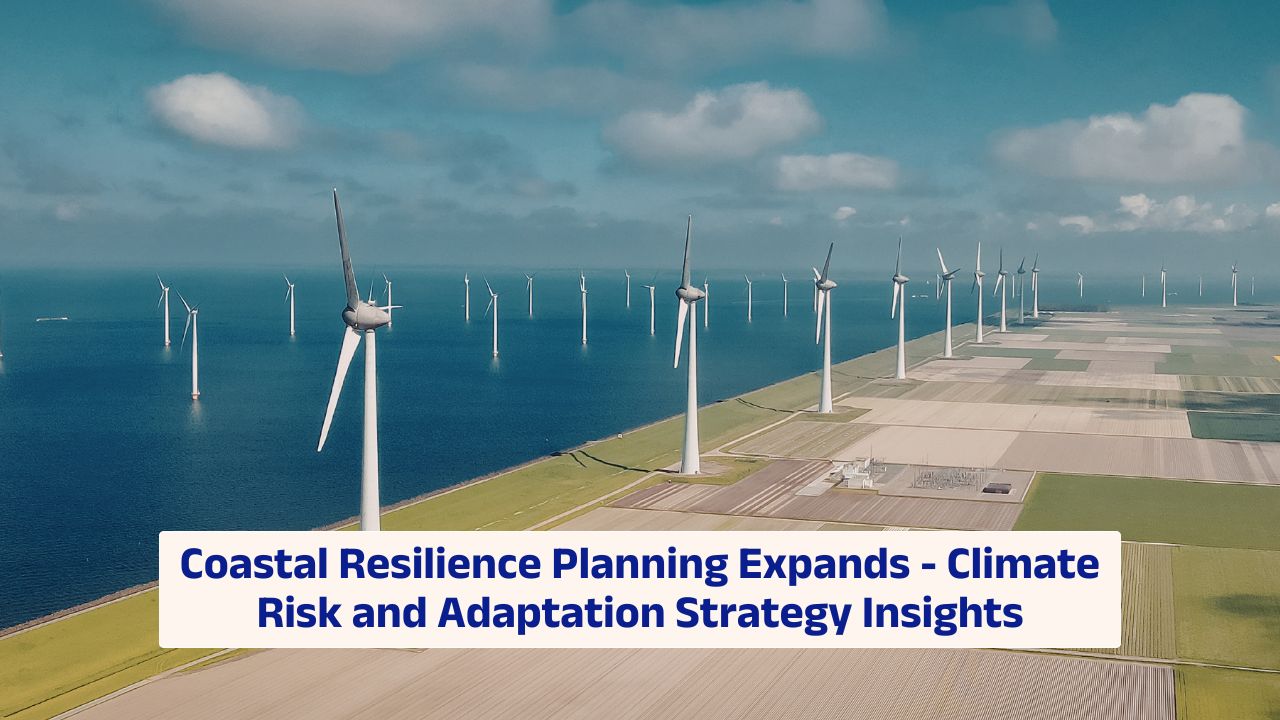
Coastal communities are accelerating resilience planning as climate risks intensify across vulnerable regions. Rising sea levels, stronger storms, and coastal erosion are placing increasing pressure on infrastructure, housing, and local economies.
Governments and planning authorities are expanding coastal resilience strategies to protect populations, strengthen infrastructure systems, and ensure long term environmental sustainability.
Modern coastal resilience planning integrates environmental science, infrastructure engineering, and risk management frameworks.
By combining climate modeling, shoreline monitoring, and adaptive infrastructure investments, policymakers can better prepare coastal regions for long term environmental challenges while maintaining economic stability.
| Sea level rise and coastal storms increase long-term environmental threats. | Details |
|---|---|
| Climate Risk | Sea level rise and coastal storms increase long term environmental threats. |
| Infrastructure Protection | Resilience plans strengthen ports, transport networks, and coastal defenses. |
| Environmental Monitoring | Data systems track shoreline change and ocean conditions. |
| Community Safety | Planning frameworks reduce disaster risk for coastal populations. |
| Policy Coordination | National and regional agencies collaborate on resilience strategies. |
Risks
Coastal regions face some of the most visible impacts of climate change. Rising sea levels gradually threaten low-lying cities, wetlands, and coastal infrastructure. At the same time, stronger storm systems increase flooding risks and accelerate shoreline erosion.
These pressures affect transportation systems, water infrastructure, tourism economies, and residential communities. Without proactive resilience planning, coastal areas may face repeated infrastructure damage and rising economic losses.
International climate research has emphasized the urgency of adaptation planning. Assessments from the Intergovernmental Panel on Climate Change highlight how coastal resilience strategies can reduce climate-related risks and support long-term environmental stability.
Strategies
Coastal resilience planning focuses on combining natural and engineered solutions to reduce climate vulnerability. Many regions are investing in strengthened seawalls, storm surge barriers, and elevated infrastructure designed to withstand flooding.
Nature-based solutions are also becoming central to resilience planning. Restoring wetlands, mangroves, and coastal dunes helps absorb storm energy while protecting ecosystems that support fisheries and biodiversity.
Urban planners are also revising zoning frameworks to discourage development in high-risk coastal zones. These policy changes aim to guide future growth toward safer areas while protecting vulnerable shorelines.
Technology
Advanced monitoring technologies are strengthening coastal resilience programs. Satellite imaging, ocean sensors, and geographic information systems allow planners to track shoreline changes, water levels, and storm patterns with greater precision.
These digital monitoring tools support data-driven decision-making. Authorities can evaluate coastal risk scenarios, prioritize infrastructure investments, and adjust resilience strategies as environmental conditions evolve.
Global institutions are encouraging data-based climate adaptation planning. Guidance from the World Bank climate resilience initiatives highlights how digital tools help governments manage coastal risks and support sustainable development.
Policy
Policy coordination plays a critical role in expanding coastal resilience planning. Many coastal systems cross administrative boundaries, requiring cooperation between national governments, regional authorities, and local communities.
Funding mechanisms are also evolving to support resilience investments. Governments are allocating climate adaptation budgets, while international financial institutions are providing support for coastal protection programs.
Effective policy frameworks encourage long-term planning rather than reactive disaster response. By integrating resilience into infrastructure development and land use planning, policymakers can reduce future climate-related costs.
Outlook
Coastal resilience planning is expected to expand rapidly as climate risks continue to intensify. Cities and coastal regions worldwide are recognizing the importance of proactive adaptation strategies that protect infrastructure, ecosystems, and communities.
Future resilience frameworks will likely combine environmental monitoring systems, climate modeling, and adaptive infrastructure investments. These integrated approaches allow governments to manage coastal risks while supporting sustainable economic development.
As vulnerable coastal regions face growing environmental pressures, comprehensive resilience planning will remain a central component of climate adaptation strategies.
By strengthening infrastructure, restoring ecosystems, and improving risk monitoring, coastal communities can better prepare for the challenges of a changing climate.
FAQs
What is coastal resilience planning?
It prepares coastal regions for climate risks and sea level rise.
Why are coastal areas vulnerable to climate change?
Sea level rise and storms increase flooding and erosion.
What are nature-based coastal solutions?
Wetlands and mangroves protect shorelines naturally.
How does technology support resilience planning?
Sensors and satellite data track coastal changes.
Who develops coastal resilience strategies?
Governments, planners, scientists, and local communities.