
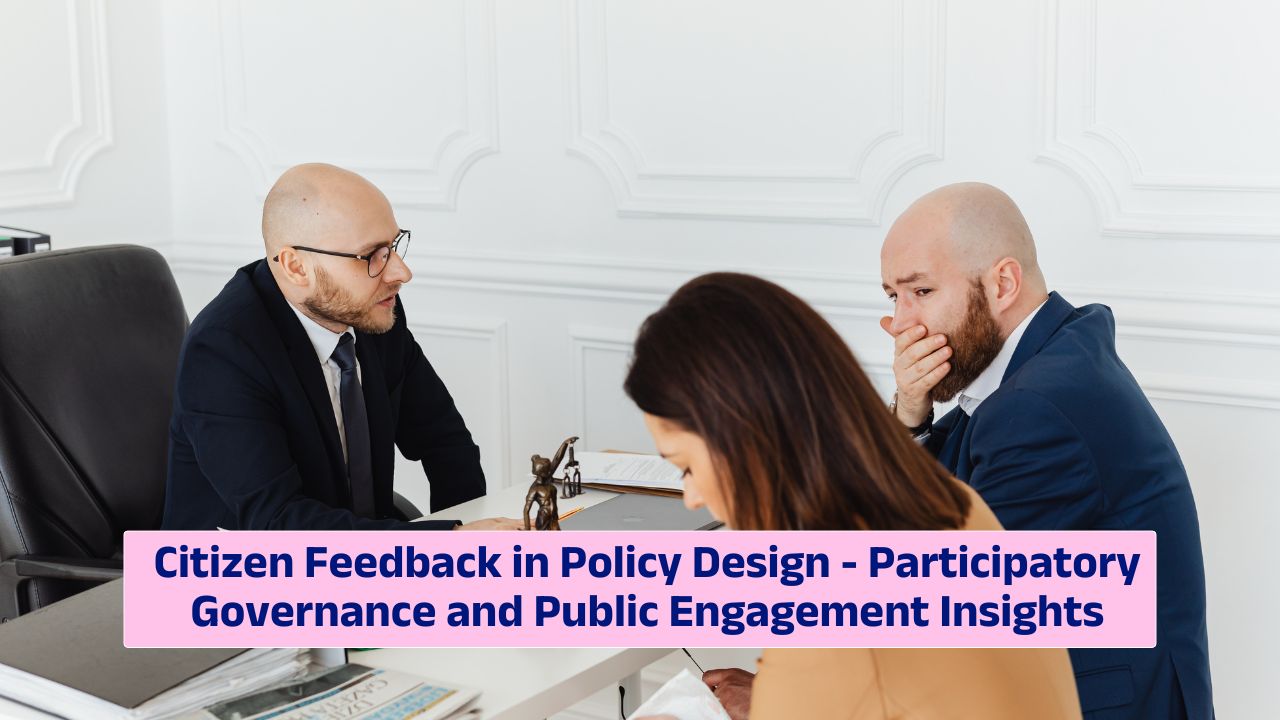
Public policy design has increasingly shifted toward participatory models that place citizens at the center of decision-making. Governments and regulatory institutions are now integrating structured citizen feedback mechanisms into policy development to improve transparency, accountability, and policy effectiveness.
This shift reflects a growing recognition that policies developed with community insight often deliver stronger outcomes and higher public trust.
Citizen feedback mechanisms create formal channels through which individuals, civil society groups, and local stakeholders can share insights before policies are finalized.
These mechanisms range from digital consultation platforms to public hearings, surveys, and participatory workshops.
When implemented effectively, they help policymakers know real-world impacts, identify unintended consequences, and design regulations that are both practical and inclusive.
| Key Point | Details |
|---|---|
| Participatory Governance | Citizens actively contribute insights during policy development |
| Digital Consultation | Online platforms allow large scale public participation |
| Evidence Driven Design | Citizen experiences help refine regulatory frameworks |
| Transparency Benefits | Open consultations improve public trust in institutions |
| Implementation Outcomes | Policies become more practical and socially accepted |
Context
Traditional policy development often relied on expert committees, regulatory bodies, and internal government analysis. While this approach provided technical rigor, it sometimes lacked direct input from the communities affected by those policies.
Integrating citizen feedback helps bridge this gap by combining technical expertise with lived experience.
Modern governance models increasingly emphasize participatory decision-making. Citizens are not only recipients of policy outcomes but also contributors to policy design. This perspective aligns with broader global governance trends promoting inclusive institutions and democratic engagement.
International organizations have also encouraged governments to adopt participatory mechanisms. Frameworks discussed in the OECD open government guidelines highlight the importance of citizen engagement in improving policy legitimacy and regulatory quality.
Mechanisms
Citizen feedback can be collected through a variety of mechanisms depending on the scale and scope of the policy initiative. Public consultations remain one of the most widely used approaches.
These consultations typically invite written comments from citizens, industry groups, academics, and advocacy organizations during a defined review period.
Digital platforms have expanded the reach of citizen participation. Online portals allow governments to gather feedback from large populations quickly and cost-effectively.
Citizens can review policy drafts, participate in surveys, or vote on proposed policy options through secure digital interfaces.
Community workshops and town hall meetings offer another effective approach. These in-person sessions allow policymakers to engage directly with residents and local stakeholders. Discussions during these sessions often reveal local challenges that may not appear in formal data or reports.
Participatory budgeting initiatives represent a more advanced form of citizen engagement. In these programs, residents help determine how public funds should be allocated across community projects. Such mechanisms demonstrate how feedback can extend beyond consultation into active decision making.
Benefits
Integrating citizen feedback into policy design offers several advantages. First, it improves policy relevance. When citizens share their experiences with public services, infrastructure, healthcare systems, or environmental conditions, policymakers gain valuable insights that may not appear in official datasets.
Second, citizen engagement strengthens transparency. When policy discussions occur in open forums, the public can observe how decisions are made and why certain options are selected. This transparency helps build institutional credibility and public confidence.
Third, feedback mechanisms help identify unintended consequences early in the policy process. Citizens often highlight practical barriers or economic impacts that policymakers may overlook during technical analysis.
Research from organizations such as the World Bank governance program shows that participatory governance models can improve policy outcomes by ensuring that regulations reflect real community needs.
Challenges
Despite the benefits, integrating citizen feedback into policy design also presents challenges. One key issue involves ensuring that participation is inclusive. Digital platforms may unintentionally exclude communities with limited internet access or lower digital literacy.
Another challenge relates to balancing diverse viewpoints. Public consultations can generate thousands of comments representing competing interests. Policymakers must carefully analyze these inputs while maintaining regulatory consistency and scientific integrity.
Administrative capacity is another consideration. Managing public consultations, analyzing feedback, and integrating insights into policy drafts requires dedicated resources and institutional expertise.
Nevertheless, many governments continue to expand citizen feedback systems because the long-term benefits for governance quality outweigh these operational challenges.
As public expectations for transparency and accountability grow, citizen participation is likely to remain a central feature of modern policy development.
Integrating structured feedback mechanisms ensures that policies are informed not only by technical expertise but also by the experiences and priorities of the communities they are designed to serve.
FAQs
What is citizen feedback in policy design?
Public input used to shape government policies.
Why is citizen feedback important?
It improves policy relevance and transparency.
How do governments collect feedback?
Through consultations, surveys, and digital platforms.
What is participatory governance?
Citizens actively contribute to policy decisions.
Can feedback change policy outcomes?
Yes, public input can refine final regulations.