
Coastal ecosystems are among the most productive and fragile environments on the planet. As rising sea levels, pollution, and urban expansion threaten shorelines worldwide, coastal preservation campaigns are gaining momentum.
What once relied mainly on environmental groups is now drawing broader participation from local communities, governments, businesses, and researchers who recognize the long-term ecological and economic value of healthy coastal systems.
This growing public support is reshaping the scale and impact of conservation initiatives. Coastal protection is increasingly viewed not only as an environmental responsibility but also as a critical strategy for climate resilience, tourism sustainability, and community safety.
As awareness expands, preservation campaigns are becoming more collaborative and data-driven, helping coastal regions better prepare for future environmental challenges.
| Key Point | Details |
|---|---|
| Public Engagement | Communities increasingly participate in coastal conservation initiatives. |
| Environmental Protection | Campaigns aim to restore habitats and reduce pollution along coastlines. |
| Climate Resilience | Healthy coastal ecosystems reduce erosion and storm damage. |
| Policy Support | Governments increasingly back preservation initiatives through regulations and funding. |
| Economic Impact | Tourism and fisheries benefit from sustainable coastal management. |
Awareness
Public awareness around coastal degradation has expanded rapidly over the past decade. Scientific research, visual documentation of shoreline erosion, and community education campaigns have made environmental challenges more visible.
As a result, coastal preservation efforts are attracting attention from people who may not have previously engaged with environmental issues.
Social media and digital communication have also amplified the reach of conservation messaging. Campaign organizers now use online platforms to highlight restoration projects, coordinate volunteer events, and share data about coastal health.
This broader exposure has helped transform preservation campaigns from niche environmental activities into widely supported civic movements.
Ecosystems
Coastal ecosystems such as mangroves, wetlands, coral reefs, and sand dunes play a vital role in protecting shorelines. These natural systems absorb wave energy, stabilize sediments, and provide habitats for marine biodiversity.
When these ecosystems degrade, coastal communities become more vulnerable to flooding, erosion, and extreme weather events.
Preservation campaigns often focus on habitat restoration. Activities may include planting mangroves, rebuilding dunes, restoring oyster reefs, and removing plastic waste from shorelines.
According to research highlighted by the National Oceanic and Atmospheric Administration, healthy coastal ecosystems can significantly reduce storm surge impacts while supporting fisheries and wildlife.
Community
One reason coastal preservation campaigns are gaining traction is their strong connection to local communities. Residents who depend on coastal resources for livelihoods often become key advocates for conservation.
Fishermen, tourism operators, and small business owners increasingly recognize that environmental protection directly affects economic stability.
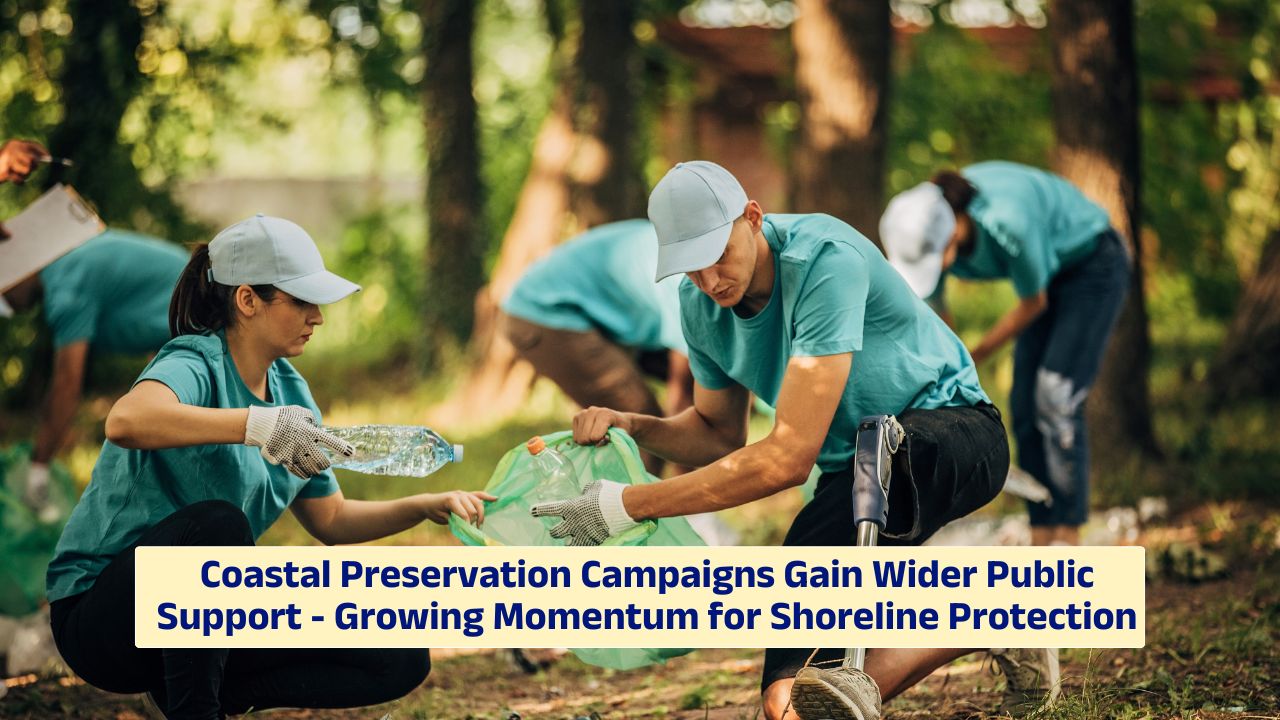
Volunteer programs have also become central to many campaigns. Beach cleanups, habitat monitoring initiatives, and citizen science projects allow individuals to contribute directly to conservation efforts.
These activities build local ownership and strengthen public support for long-term preservation strategies.
Policy
Government policy plays a crucial role in sustaining coastal preservation initiatives. Regulatory frameworks can limit harmful development, reduce pollution, and establish protected marine areas.
As public interest grows, policymakers are under increasing pressure to implement stronger environmental protections for vulnerable coastal regions.
International organizations also contribute guidance for coastal management. Programs supported by the United Nations Environment Programme encourage countries to adopt integrated coastal zone management strategies that balance environmental protection with economic development.
Momentum
The expansion of public support is transforming coastal preservation into a broader social movement. Collaborative partnerships between governments, nonprofits, scientists, and local residents are enabling larger and more effective conservation projects.
These partnerships also improve funding opportunities and expand access to scientific expertise.
As climate risks intensify, coastal preservation campaigns will likely continue attracting public attention. Protecting coastal ecosystems is increasingly recognized as a practical investment in environmental resilience, economic security, and community well-being.
With growing awareness and collective action, coastal preservation efforts are moving beyond small-scale initiatives toward comprehensive strategies capable of safeguarding shorelines for future generations.
FAQs
What are coastal preservation campaigns?
Initiatives that protect and restore coastal ecosystems.
Why are coastal ecosystems important?
They protect shorelines and support marine biodiversity.
How can communities support coastal protection?
Through cleanups, advocacy, and habitat restoration.
What threatens coastal environments?
Pollution, erosion, climate change, and urban expansion.
Who leads coastal preservation initiatives?
Governments, nonprofits, scientists, and communities.