
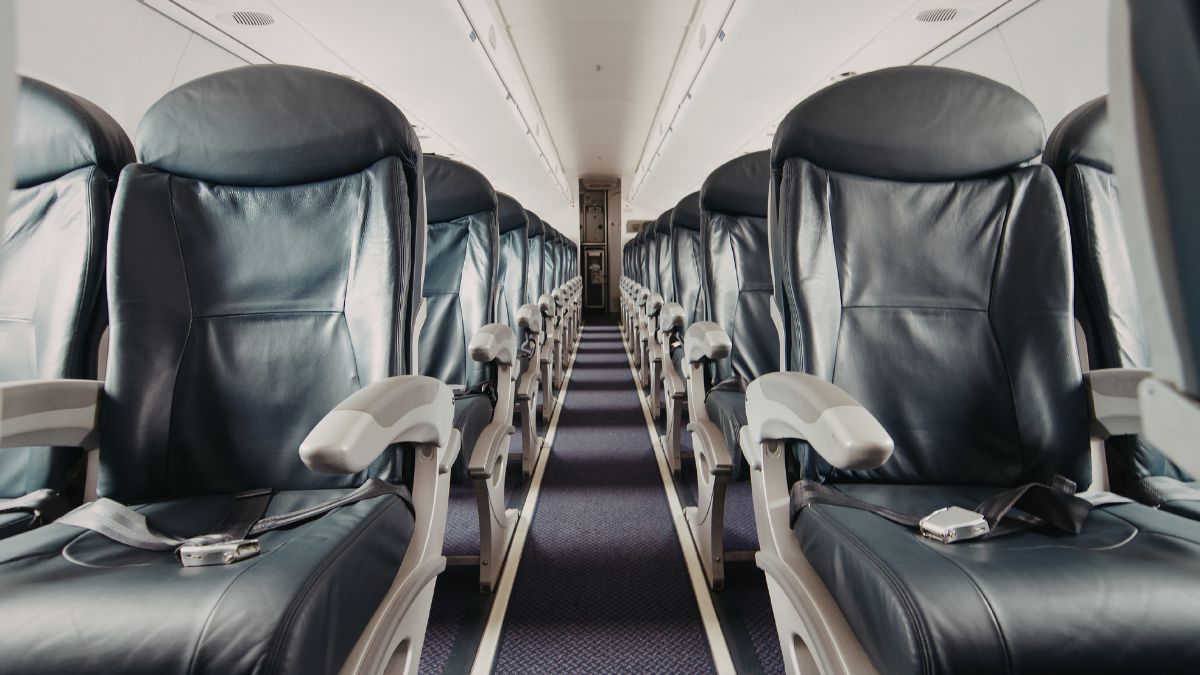
Small, repeated choices often reveal underlying patterns in how people think and regulate themselves. One such choice is where to sit in a shared space. Whether on a plane, in a café, or at a cinema, many people consistently choose the aisle seat.
At face value, the reason appears practical. However, psychological research suggests that this preference may also reflect a deeper need for control and flexibility in uncertain environments.
Choice
In everyday settings, seating decisions are usually made quickly and without much reflection. Yet, the preference for an aisle or exit-adjacent seat is not random. It provides a clear physical advantage: ease of movement. More importantly, it offers a sense of psychological readiness.
This behavior aligns with what researchers describe as autonomous exit – the assurance that one can leave a situation at any time without disruption or reliance on others. The individual may not intend to leave, but the option itself carries value.
Theory
The concept of autonomous exit can be understood through Self-Determination Theory, developed by Edward Deci and Richard Ryan. This framework identifies three core psychological needs that influence motivation and wellbeing.
| Need | Description | Example |
|---|---|---|
| Autonomy | Sense of control over actions | Choosing where to sit |
| Competence | Feeling effective and capable | Completing tasks efficiently |
| Relatedness | Connection with others | Social interaction |
Among these, autonomy is most relevant to seating behavior. When individuals feel they have control over their actions and environment, they tend to experience lower stress and greater comfort.
Control
Empirical research supports the importance of perceived control. A meta-analysis involving more than 11,000 participants found a consistent relationship between low perceived control and higher levels of anxiety.
Additional studies in neuroscience indicate that the belief in having an exit option can influence physiological responses. When individuals perceive that they can leave a stressful situation, their nervous system shows lower activation levels. This effect occurs even if the exit is never used.
In this context, the aisle seat functions as a simple but effective way to maintain a sense of control.
Habit
While the behavior may begin as a practical preference, it can develop into a consistent habit. Over time, always choosing positions near exits may reflect a broader tendency to maintain flexibility and avoid constraint.
This does not necessarily indicate a problem. However, when the pattern becomes automatic and unexamined, it may influence how individuals engage in social or shared environments.
For example, a person who consistently positions themselves near an exit may also exhibit subtle forms of disengagement, such as reduced participation or a tendency to leave early.
Awareness
Knowing the motivation behind such habits can be useful. The key question is not whether the behavior should change, but what purpose it serves.
In some cases, the preference may be linked to past experiences where maintaining control was important. These patterns can persist even when the original context is no longer relevant.
By observing the physical and emotional responses associated with these choices, individuals can better understand whether the behavior reflects current needs or residual habits.
Balance
There is a distinction between maintaining autonomy and relying on constant exit readiness. The behavior itself is not inherently positive or negative. Its impact depends on context and intention.
| Behavior | Balanced Response | Unexamined Pattern |
|---|---|---|
| Seat selection | Occasional preference | Consistent exit positioning |
| Social engagement | Active participation | Partial involvement |
| Decision-making | Context-based | Habit-driven |
| Emotional state | Stable | Mild but persistent tension |
A balanced approach allows individuals to retain flexibility while remaining present in the situation.
Presence
Psychological stability is often associated with the ability to remain engaged in the present moment. Individuals who feel secure in their environment may not require constant reminders of available exits.
This does not mean abandoning personal preferences. Instead, it involves recognizing when those preferences are necessary and when they are not.
In some situations, choosing a seat away from the exit may encourage fuller engagement, particularly in social or collaborative settings.
Reflection
The preference for aisle seating illustrates how small decisions can reflect broader psychological processes. Autonomous exit is not inherently problematic, but it can serve as a useful indicator of how individuals relate to control and uncertainty.
Observing these patterns without judgment allows for greater awareness. Over time, this awareness can support more intentional choices, whether that means continuing to choose the aisle or occasionally selecting a different seat.
The broader implication is straightforward. A sense of control contributes to wellbeing, but it does not always require constant reinforcement. In some cases, reducing reliance on exit options may support a more stable and engaged experience.
FAQs
What is autonomous exit?
It is the sense you can leave anytime.
Why choose aisle seats?
They offer control and easy movement.
Does it relate to anxiety?
Yes, linked to perceived control levels.
Is it a bad habit?
Not always, depends on intention.
Can awareness help change it?
Yes, it supports more intentional choices.