
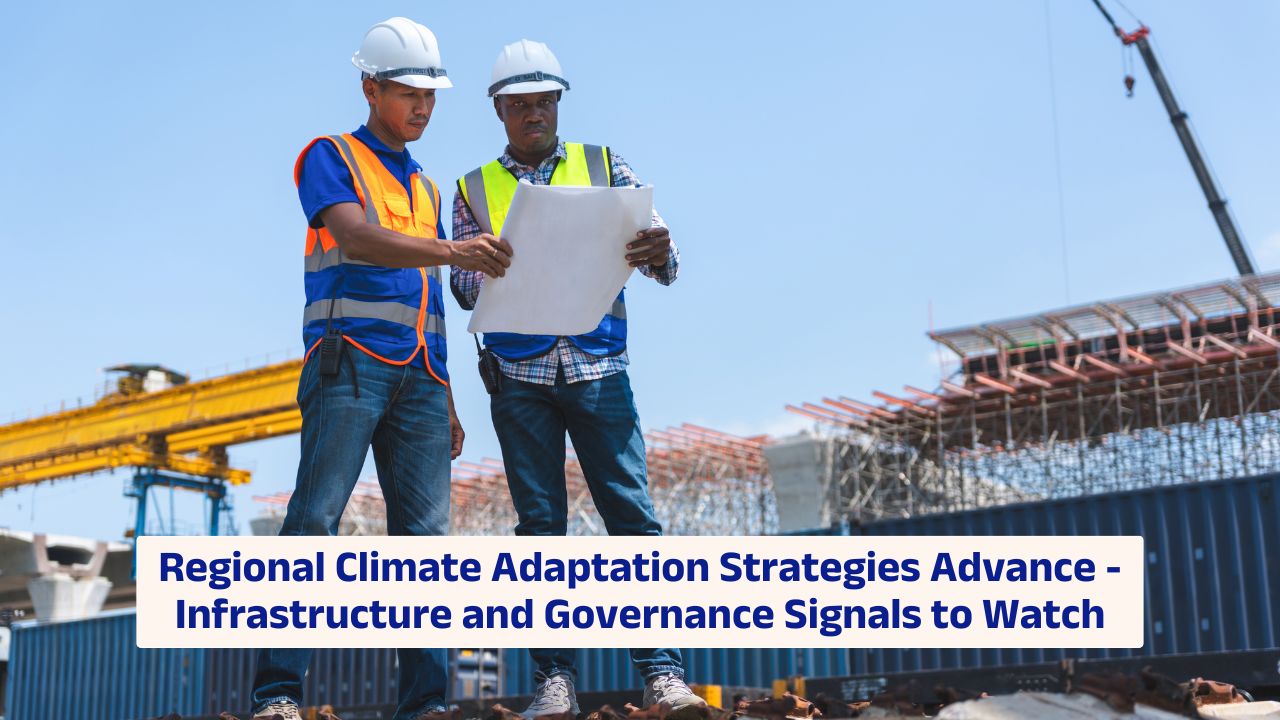
Regional climate adaptation strategies are moving from planning documents into concrete implementation across infrastructure, agriculture, water systems, and urban development.
After years of climate risk assessments and policy frameworks, many regional governments are now translating adaptation plans into funded projects designed to protect communities from heat waves, flooding, drought, and extreme weather disruptions.
This transition marks a critical shift in climate governance. While mitigation policies focus on reducing greenhouse gas emissions, adaptation strategies concentrate on resilience.
Regional authorities are increasingly responsible for turning long-term climate risk projections into operational decisions that affect land use planning, disaster preparedness, and economic stability.
| Key Point | Details |
|---|---|
| Infrastructure upgrades | Regions are strengthening transport, water, and energy systems against climate stress. |
| Water resilience | Drought planning and flood management are central components of adaptation. |
| Nature based solutions | Wetlands, forests, and coastal buffers are used to reduce climate impacts. |
| Funding mobilization | Public finance and development funds are supporting regional resilience programs. |
| Policy integration | Climate risk is increasingly embedded in planning, zoning, and infrastructure policy. |
Drivers
The urgency behind regional climate adaptation is driven by escalating climate risks that are already affecting infrastructure and economic systems.
Heat waves strain power networks, flooding damages transportation corridors, and prolonged droughts threaten agriculture and water security.
These pressures have pushed regional governments to accelerate implementation timelines that were once viewed as long-term planning exercises.
Scientific assessments continue to emphasize the need for adaptation alongside emissions reduction.
The Intergovernmental Panel on Climate Change assessment on climate impacts and adaptation highlights that climate hazards are intensifying across regions, making proactive resilience investments essential for reducing long-term economic and social damage.
Infrastructure
Infrastructure adaptation is one of the most visible components of implementation. Transportation networks are being redesigned to withstand extreme rainfall and heat stress, while energy grids are upgraded to manage higher peak demand and climate-driven disruptions.
In coastal regions, protective infrastructure such as seawalls and elevated transport routes is increasingly integrated into development planning.
Water infrastructure is also undergoing significant modernization. Regions facing drought risks are investing in reservoir management, water recycling, and smarter distribution networks.
In flood-prone areas, stormwater systems are being redesigned to handle more intense rainfall events while protecting urban centers and agricultural land.
Nature
Nature-based adaptation strategies are gaining momentum because they provide cost-effective resilience while supporting biodiversity and ecosystem services.
Wetland restoration can reduce flood impacts, mangrove forests protect coastlines from storm surges, and urban tree cover helps lower heat exposure in cities.
These approaches are increasingly supported by international institutions. The United Nations Environment Programme climate adaptation initiative emphasizes the role of ecosystem restoration and sustainable land management as core components of climate resilience strategies.
Finance
Financing adaptation remains a major challenge for regional governments. Infrastructure upgrades and ecosystem restoration projects require substantial capital, and many regions must balance climate investments with other development priorities.
Public funding programs, development bank loans, and climate resilience funds are increasingly used to support implementation.
Private sector participation is also expanding. Insurance companies, infrastructure investors, and utilities are recognizing that climate resilience projects reduce long-term operational risk.
As a result, adaptation investments are gradually becoming integrated into infrastructure finance and public-private partnerships.
Governance
Effective adaptation requires coordination across multiple levels of government. Regional strategies must align with national climate policies while addressing local geographic conditions and economic realities.
Planning agencies, emergency management authorities, environmental departments, and infrastructure operators must collaborate to ensure that resilience investments are consistent and effective.
Data and climate modeling are also becoming central tools in governance. High-resolution climate projections allow planners to identify vulnerable infrastructure, prioritize investments, and design policies that anticipate future climate conditions rather than reacting to past events.
Outlook
The implementation phase of regional climate adaptation strategies represents a significant evolution in climate policy. Planning frameworks are now being tested through real-world projects that aim to strengthen infrastructure, protect ecosystems, and safeguard economic stability.
Regions that successfully integrate science, finance, and governance into adaptation programs will be better positioned to manage the growing risks associated with climate change.
As climate impacts intensify over the coming decades, regional adaptation strategies will increasingly shape how communities design cities, manage natural resources, and protect critical infrastructure.
The shift from strategy to implementation signals that resilience planning is no longer optional. It is becoming a central component of sustainable regional development.
FAQs
What is climate adaptation?
Actions that reduce climate risks to communities and systems.
Why are regions implementing adaptation plans?
Climate impacts are increasing and require resilience planning.
What sectors are affected by adaptation?
Infrastructure, water systems, agriculture, and cities.
What are nature-based adaptation solutions?
Using ecosystems like forests and wetlands to reduce risk.
Who funds climate adaptation projects?
Governments, development banks, and private investors.