
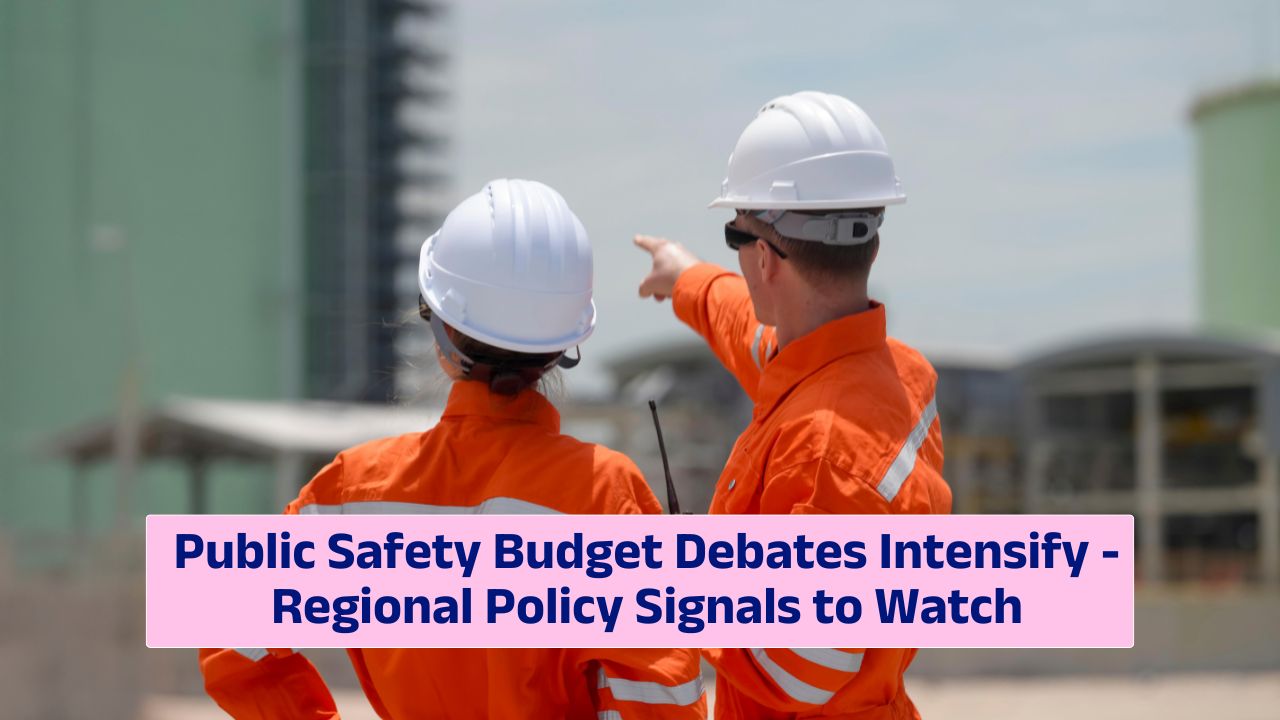
Public safety spending is moving to the center of regional policy debates as governments confront rising urban pressures, emergency response demands, and evolving security risks.
Across several key regions, policymakers are reassessing how police funding, emergency services, disaster preparedness, and community safety programs should be financed.
These discussions reflect broader fiscal pressures while also highlighting the need to balance security outcomes with responsible public budgeting.
Regional authorities increasingly face complex tradeoffs. Population growth, climate-related disasters, and new technology-driven threats are expanding the scope of public safety responsibilities.
At the same time, public expectations for transparency and measurable outcomes have intensified, forcing governments to evaluate whether current funding models remain effective.
| Key Point | Details |
|---|---|
| Budget Pressure | Regions face fiscal limits while safety demands expand |
| Modernization | Investment in surveillance, data systems, and emergency tech grows |
| Community Focus | Programs addressing prevention and local engagement gain funding |
| Disaster Preparedness | Climate driven emergencies require expanded response budgets |
| Accountability | Governments demand measurable outcomes for safety spending |
Drivers
Several structural forces are pushing public safety budgets higher. Rapid urbanization is one of the most significant. As cities expand, law enforcement coverage, emergency response capacity, and traffic management systems must scale accordingly.
Larger urban populations often correlate with increased service demand even when crime rates remain stable.
Another key driver is the growing complexity of security risks. Cybercrime, organized financial fraud, and cross-border criminal networks require more advanced investigative resources. Governments are investing in digital forensics units, integrated intelligence systems, and coordinated regional policing initiatives.
Emergency preparedness also plays a major role. Floods, heat waves, and severe storms have forced regional authorities to expand disaster response infrastructure.
According to research from the World Bank disaster risk management program, preventive investment in preparedness and early warning systems significantly reduces long term economic damage.
Spending
Public safety budgets typically include multiple funding streams. Police services remain the largest component, covering personnel, patrol operations, investigative units, and specialized enforcement teams. However, modern safety strategies increasingly distribute funding across a broader set of programs.
Emergency medical services, fire departments, disaster response teams, and public health coordination units now represent a larger share of spending in many regions. Technology investments have also grown rapidly.
Smart traffic systems, real-time emergency communication networks, and predictive analytics platforms are becoming common features of public safety modernization programs.
Budget proposals frequently include funding for community-based initiatives. These programs focus on violence prevention, youth outreach, mental health response teams, and neighborhood mediation.
Policymakers increasingly view prevention efforts as cost-effective complements to traditional enforcement.
Debate
Despite broad agreement that safety services are essential, debates over funding levels have intensified. Critics often argue that expanding police budgets without measurable outcomes can strain public finances. Supporters counter that underfunded departments risk slower response times, lower investigative capacity, and reduced deterrence.
Another major issue is how resources should be allocated across different safety functions. Some policymakers prioritize traditional law enforcement capacity, while others advocate shifting funds toward prevention, rehabilitation programs, and social support services.
International policy research has shown that balanced strategies often produce stronger long-term results. Analysis from the OECD public safety governance research highlights that integrated approaches combining enforcement, prevention, and social policy tend to improve safety outcomes while maintaining fiscal sustainability.
Reforms
To address these debates, several regions are investigating structural reforms in public safety budgeting. Performance-based funding is gaining traction, linking budget allocations to measurable outcomes such as response times, crime clearance rates, and emergency preparedness metrics.
Transparency initiatives are also expanding. Many governments now publish detailed public safety expenditure reports and open data dashboards to allow citizens to monitor how funds are used. This approach helps strengthen public trust while encouraging more efficient resource allocation.
Technology modernization remains another priority area. Investment in digital infrastructure allows agencies to coordinate more effectively across jurisdictions, improving response efficiency while reducing duplication of effort.
As budget discussions continue, the central challenge for policymakers is balancing fiscal responsibility with the need to maintain resilient safety systems. Regions that successfully integrate prevention, technology, and accountable governance into their funding strategies are likely to shape the next generation of public safety policy.
FAQs
What is a public safety budget
Funding for police, fire, EMS, and emergency response.
Why are safety budgets increasing
Urban growth and disaster risks raise service demand.
What programs are included
Police, emergency services, prevention, and tech.
Why are these budgets debated
Governments must balance safety and fiscal limits.
How are regions improving spending
Through transparency, tech investment, and metrics.