
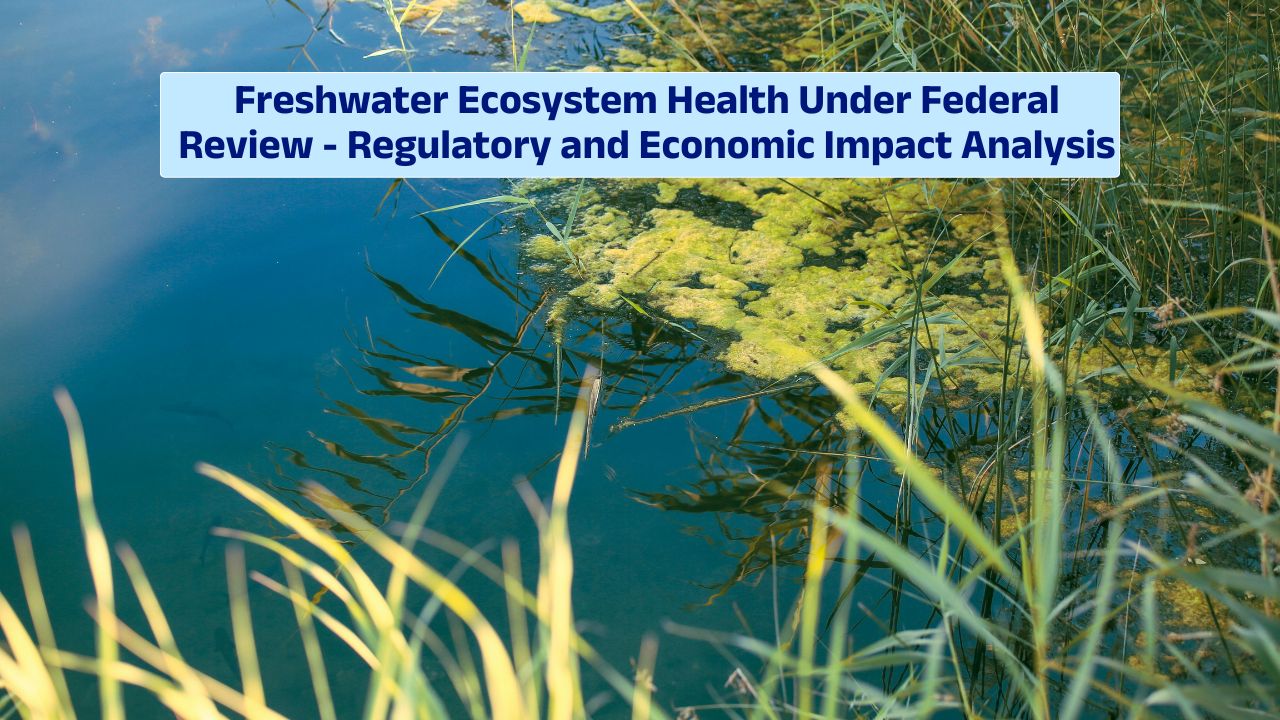
Freshwater ecosystem health has moved to the forefront of federal environmental review as policymakers confront rising pollution loads, biodiversity loss, and climate-driven hydrological stress.
Rivers, lakes, wetlands, and aquifers underpin drinking water systems, agricultural productivity, and industrial supply chains. Their degradation now carries direct regulatory, economic, and public health consequences, prompting a comprehensive federal reassessment.
| Key Point | Details |
|---|---|
| Water Quality Standards | Review of nutrient limits, contaminant thresholds, and discharge permits |
| Biodiversity Protection | Assessment of habitat fragmentation and aquatic species decline |
| Climate Resilience | Evaluation of drought, flooding, and temperature variability impacts |
| Infrastructure Oversight | Inspection of dams, levees, and wastewater systems |
| Economic Implications | Impacts on agriculture, fisheries, municipal utilities, and industry |
Regulatory Scope
The federal review of freshwater ecosystem health centers on statutory frameworks such as the Clean Water Act and associated rulemaking authority. Agencies are reassessing water quality criteria, pollutant discharge permits, and watershed management strategies to ensure compliance with updated scientific knowledge.
The Environmental Protection Agency’s water data resources play a critical role in benchmarking contaminant levels and identifying impaired water bodies.
Federal oversight also extends to interstate water systems, where upstream pollution can impose downstream economic and health costs.
Enhanced monitoring requirements are under consideration, including expanded testing for emerging contaminants such as PFAS compounds. These substances have intensified scrutiny due to persistence in aquatic environments and potential health risks.
Biodiversity
Aquatic biodiversity loss has accelerated in recent decades, driven by habitat destruction, invasive species, altered flow regimes, and nutrient runoff. Federal reviewers are examining whether current conservation measures adequately protect freshwater species, many of which are more imperiled than their terrestrial counterparts.
Wetlands restoration and riparian buffer expansion are emerging as high-priority interventions. Scientific assessments supported by institutions such as the US Geological Survey water resources mission area provide hydrological modeling and ecosystem trend data that inform policy recalibration. These datasets allow regulators to evaluate long-term ecological shifts rather than isolated pollution events.
Climate Pressure
Climate variability compounds freshwater stressors. Intensified rainfall events increase sediment and nutrient runoff, while prolonged drought reduces dilution capacity and concentrates contaminants. Warmer water temperatures diminish dissolved oxygen levels, placing additional strain on fish populations and aquatic invertebrates.
Federal review frameworks now integrate climate risk modeling into watershed management plans. This includes scenario analysis for reservoir capacity, groundwater recharge rates, and floodplain resilience. By incorporating forward-looking climate projections, regulators aim to transition from reactive remediation to proactive ecosystem management.
Infrastructure
Freshwater ecosystem health is closely linked to infrastructure integrity. Aging wastewater treatment facilities, stormwater systems, and agricultural drainage networks contribute to pollutant loading when inadequately maintained. Federal review efforts increasingly evaluate infrastructure performance alongside natural ecosystem indicators.
Investment in green infrastructure, such as constructed wetlands and permeable surfaces, is gaining policy traction. These approaches reduce runoff, filter pollutants naturally, and restore hydrological balance. Infrastructure modernization, therefore, becomes both an environmental compliance strategy and a cost containment measure for municipalities.
Economic Stakes
The economic implications of freshwater ecosystem degradation extend well beyond environmental compliance costs. Agricultural producers rely on stable irrigation supplies, fisheries depend on healthy spawning habitats, and municipal utilities require predictable source water quality.
Federal review outcomes may influence permitting timelines, water allocation priorities, and operational standards across sectors.
Stricter nutrient thresholds, for example, could affect fertilizer management practices and livestock operations. Conversely, improved ecosystem health can reduce long-term water treatment expenses and safeguard tourism revenue in lake and river communities.
Policymakers must balance regulatory rigor with economic feasibility, particularly in regions where water-intensive industries dominate local employment.
Ultimately, the federal review of freshwater ecosystem health represents a structural reassessment of how water resources are valued and governed.
Rather than treating water bodies as passive receptacles for discharge, policy is increasingly oriented toward ecological integrity, resilience, and intergenerational stewardship.
The outcome of this review will shape water governance frameworks, compliance costs, and environmental performance standards for years to come.
FAQs
Why is freshwater under federal review?
Due to pollution, biodiversity loss, and climate stress.
What laws guide the review?
Primarily, the Clean Water Act framework.
Are new contaminants being assessed?
Yes, including emerging PFAS compounds.
How does climate affect freshwater health?
It alters flow, temperature, and pollutant levels.
Will industries face stricter rules?
Potentially, depending on review outcomes.